


Below I’ve laid out what you should know about the emerging world of cryptocurrency. As always, this by no means is a call to action to go out and buy or sell Bitcoin. The goal of the article is to hopefully educate and spur conversations/questions. Hope you enjoy.
Bitcoin Defined
What exactly is bitcoin? In a nutshell, bitcoin is the world’s first digital network. It’s protected by a nearly impenetrable system of global computers (or miners) and built upon foundations in cryptography—which contributes to the fortress-like security of the network. The digital currency that supports this network is called bitcoin, the world’s first cryptocurrency.
Bitcoin is also the first monetary network controlled by users without the need for a trusted third party (e.g., a central bank or financial institution). Transactions are anonymous, can be conducted anytime, and are recorded in an open ledger (known as the blockchain) that can be viewed in real time.
Performance and Risk
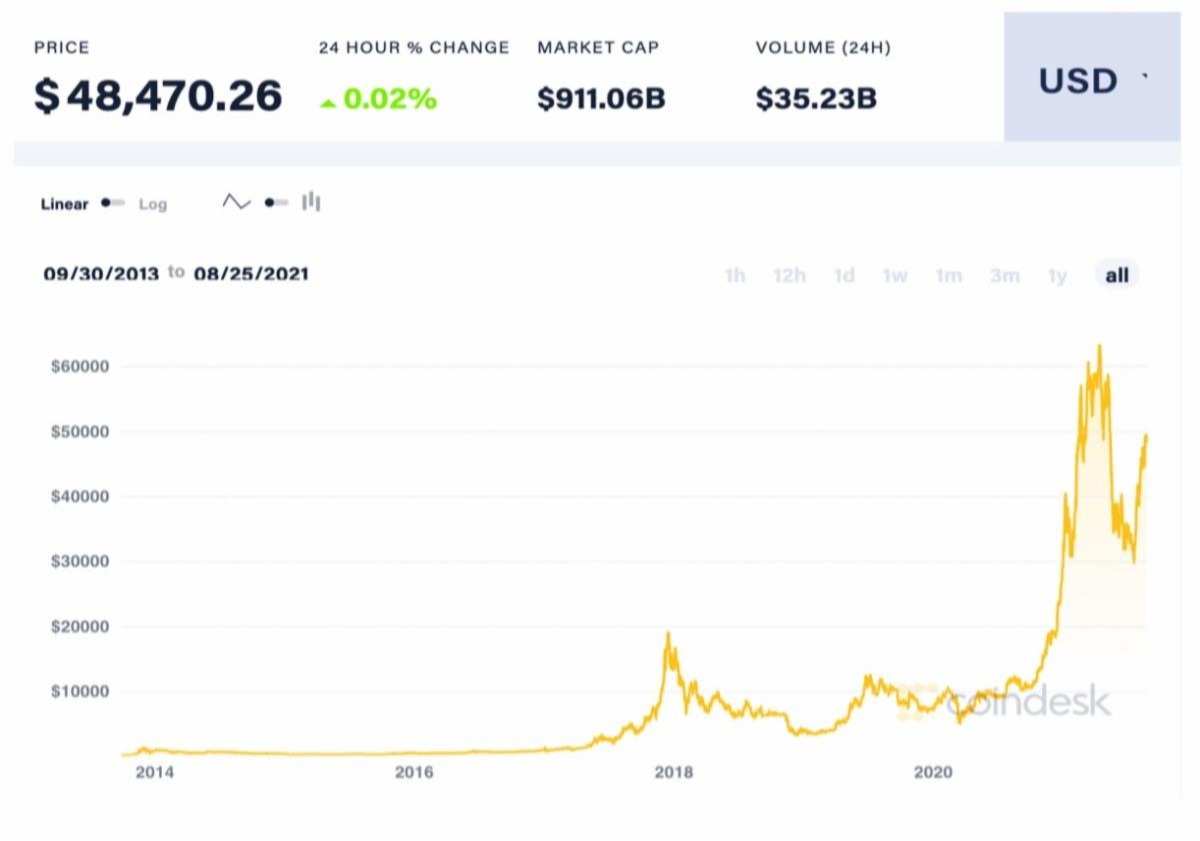
Since its inception, Bitcoin’s performance has been extremely volatile, with significant peaks and valleys. How significant? Purchasers of bitcoin at its peak in 2017 (see Figure 1) would have experienced a drop in value of roughly 80 percent over the next year. On the other hand, at current values, the price of bitcoin has since doubled in value from that same 2017 peak. Just this year we’ve seen the price cross over the $60,000 threshold, only to fall below $30,000, and bounce back to over $48,000.
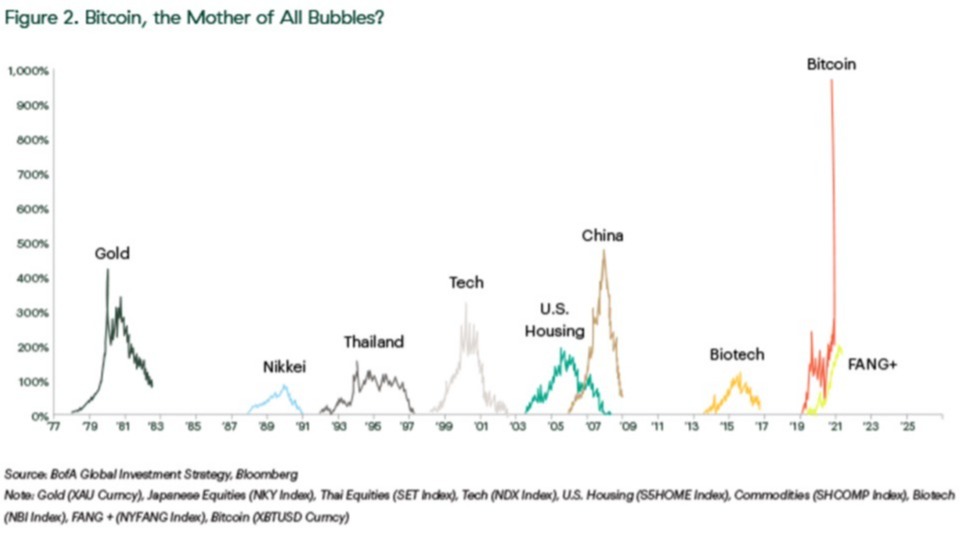
Today many Wall Street strategists contend bitcoin is in the midst of another bubble. In fact, Bank of America strategists are even calling it the “mother of all bubbles,” based on a comparison of performance with past asset bubbles (see Figure 2).
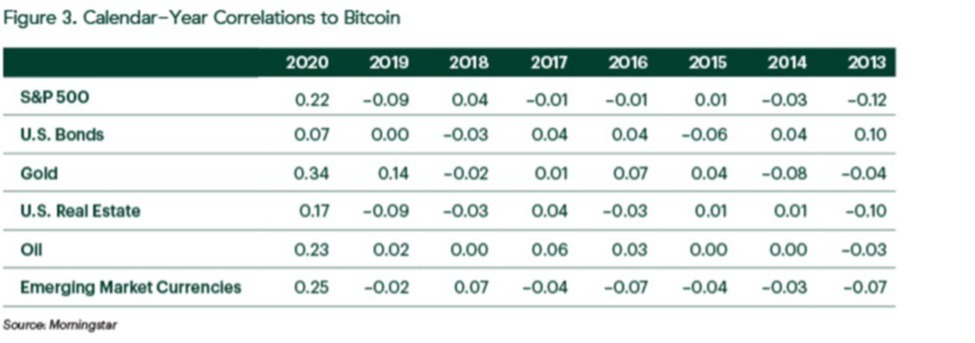
Bitcoin over the long-term time frame also has a low correlation with traditional asset classes (see Figure 3). This means it moves in the opposite direction of the general market. For example, in 2020 Bitcoin was most correlated to the returns of gold. However, in 2018, it was the most uncorrelated to gold, bonds, and real estate. Over the long-term it doesn’t move in a traditional correlation pattern as many other asset classes do.
From Here: Bull or Bear Case for Bitcoin?
Who knows… But here are a few of the pros and cons to consider….
The Bull Case for Bitcoin
- Decentralized nature: Holders of bitcoin have ultimate control over their money; there is no centralized authority that can issue new currency and no financial institution that has control over their funds.
- Natural inflation hedge: Bitcoin is often seen as a hedge against inflation.
- Store of value: The concept of bitcoin as a store of value (especially in Treasury accounts at corporations) has become increasingly popular. This idea hinges on a belief that bitcoin is a better alternative to dollar-based assets, as well as the risk of a significant devaluation of dollars, based on years of increased money supply.
- Institutional support: Many institutions are seriously considering bitcoin as part of their overall asset allocation.
The Bear View
- Intangible asset: Many bitcoin deniers see it as a pyramid scheme or “scam” because bitcoin is an intangible asset.
- Manipulation: Another argument is that cryptocurrencies can easily be manipulated.
- Regulatory concerns: Due to the decentralized nature of bitcoin, transactions between parties can be done completely anonymously, which has given rise to shady, underground platforms, such as Silk Road, a drug marketplace that was shut down in 2014. Regulators are watching developments in the space closely.
- Ripe for fraud: Because it is unregulated and traded anonymously, bitcoin is ripe for fraud, scams, Ponzi schemes, and other “creative” ways of getting hold of bitcoin or access to bitcoin wallets.
The Bottom Line
Much remains to be seen about bitcoin. Will it displace our old ways of exchanging value? Like gold, is it a viable store of value? Is it a better option than many fiat currencies in emerging markets that are constantly devaluing their currencies? Or is bitcoin the biggest bubble we’ve ever experienced? We don’t have the answers to many of these questions. What we do know is that, despite the likelihood of more volatility, hacks, and scams, cryptocurrencies remain one of the most intriguing technological advances in many years.
If you’re curious about or are seriously considering investing in bitcoin, the bottom line is that you must do your own due diligence, thoroughly research and understand the benefits and significant risks, and be fully prepared to lose your entire investment before making any decisions.
This article is intended strictly for educational purposes only and is not a recommendation for or against cryptocurrency.
Frank Vance is located at 200 N Union St. Kennett Square, PA 19348 and can be reached at 412-722-3795. Securities and Advisory Services offered through Commonwealth Financial Network®, member FINRA/ SIPC, a Registered Investment Adviser.